
ERPC scales Solana Shredstream shared endpoints with node expansion in key cities, further strengthening peak resilience and low latency
ELSOUL LABO B.V. (Headquarters: Amsterdam, The Netherlands; CEO: Fumitake Kawasaki) and Validators DAO have performed node expansion maintenance for the Solana Shredstream shared endpoints in Frankfurt, Amsterdam, and New York. In response to rapidly growing demand, we increased concurrent capacity during peak hours and raised streaming headroom, making it easier to sustain low latency.
We care about every millisecond and continuously improve to deliver the best environment. We will keep upgrading going forward. Thank you for your continued support.
What changes with this upgrade
The focus of this release is node addition. We horizontally expanded both the processing and distribution tiers of the shared endpoints, improving peak throughput, suppressing queue backlogs, and increasing failover headroom. This makes it easier to keep latency low and availability high even during sudden request surges or spikes. There are no changes to price, specifications, rate limits, or authentication.
Direct Shreds advantages, technical background, and operational notes
The upstream intake of Shredstream uses UDP, where longer distance increases loss and negatively affects pipeline speed. We minimize this segment by design, while the distribution side uses gRPC over TCP so retransmission secures stability. The node expansion compounds this zero-distance design and further lifts peak resilience.
Usage update
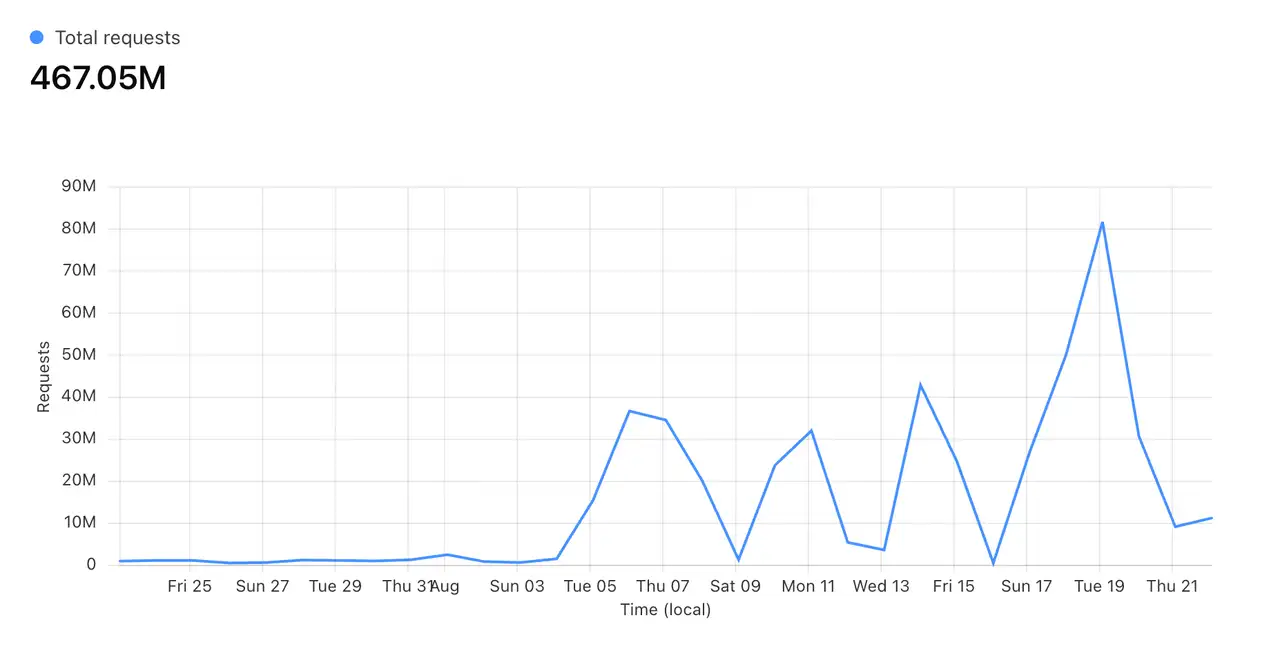
Thanks to your feedback and our continuous multi-faceted improvements, together with this node expansion and recent R&D results, usage of ERPC’s shared endpoints alone has grown more than 10x month over month.
Place your resources on the same network
By combining EPYC VPS instances located on the same network as the shared endpoints, you can avoid round trips over the public Internet that add the most latency, further reducing end-to-end latency. Simply placing your application nearby removes network-induced bottlenecks.
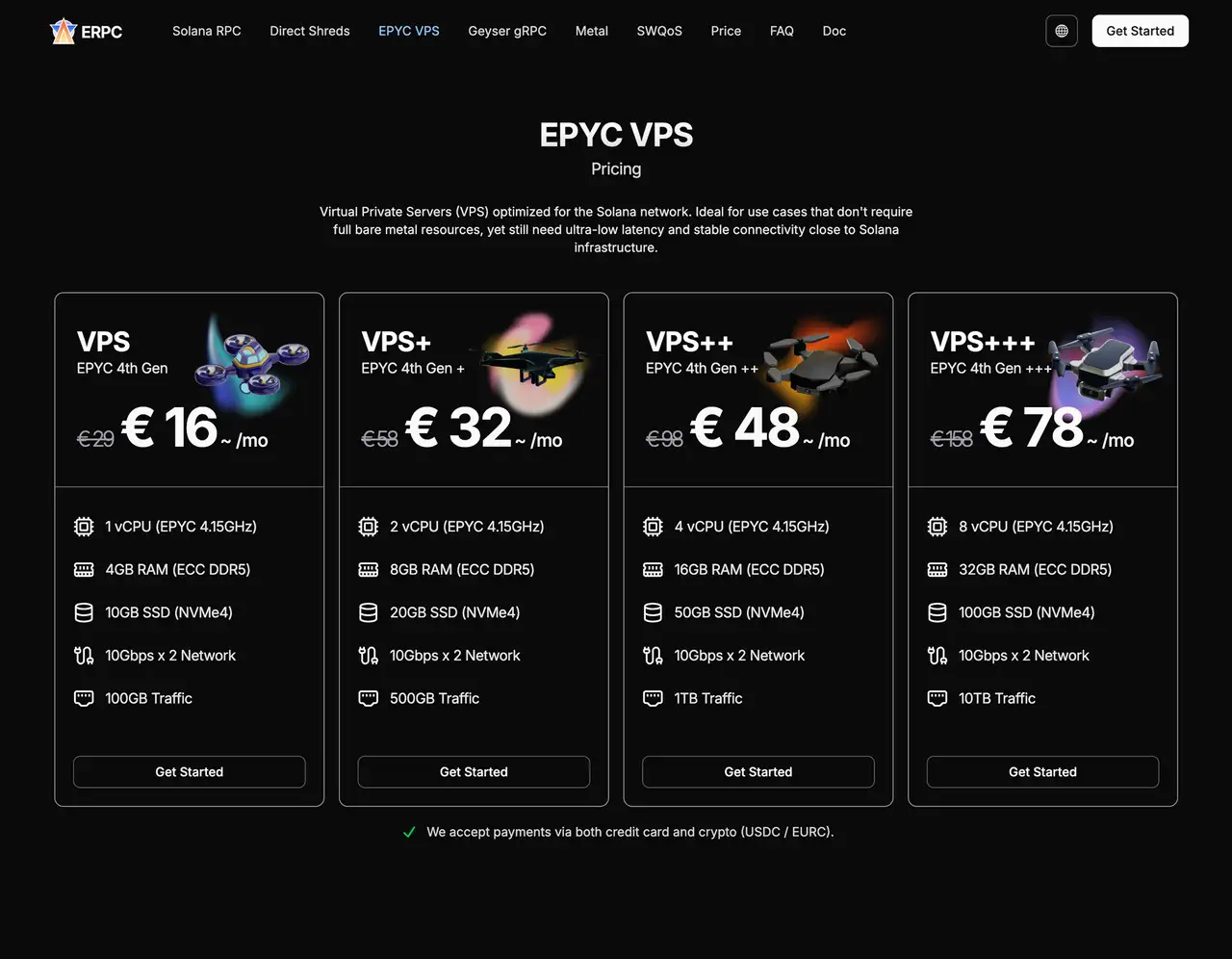
Bare-metal servers remain the fastest option. The premium line has frequently sold out, but we continuously add inventory. You can also join the waitlist.
How to use the new endpoints
Subscribers can check their allowed IP address and current service endpoint in the ERPC Web Dashboard. There are no changes to price, rate limits, authentication, or specifications.
Problems ERPC solves
We build dedicated Solana infrastructure and a zero-distance oriented network to solve the following problems.
- Transaction failures and latency variability common in general RPC environments
- Performance throttling by many infrastructure providers
- The large impact of network distance on communication quality
- Smaller projects finding it harder to access high-quality infrastructure
These improvements are driven by your feedback and the R&D built on it. We will keep this cycle running, validate in the field, and deliver the best environment available at each point in time.
For account, service, or setup questions, use the support section of the ERPC Web Dashboard.
- ERPC official site: https://erpc.global/en
- ERPC Web Dashboard
Thank you as always. We appreciate your continued support.